
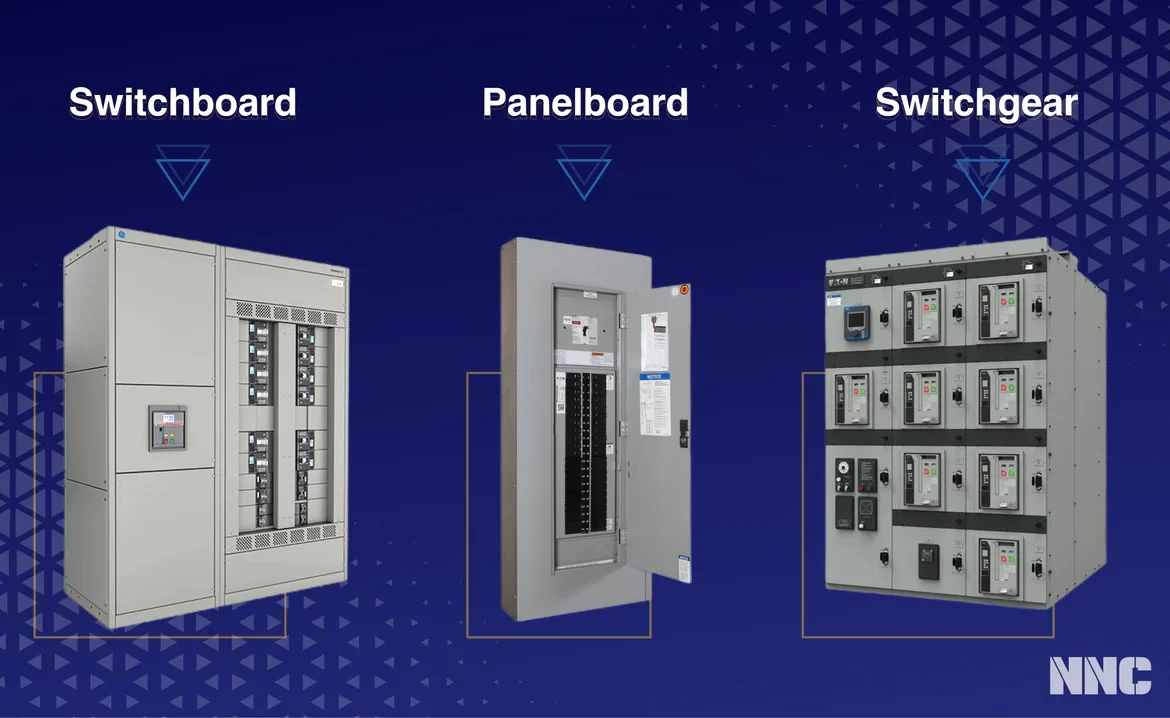
Electrical Distribution 101: Panelboards, Switchboards, and Switchgear Compared
Electrical distribution systems are the backbone of any building—quietly routing power from the utility source to everything from lighting and HVAC systems to critical industrial equipment. At the heart of these systems are three commonly confused components: panelboards, switchboards, and switchgear.
While they may look similar at a glance, each serves a distinct purpose and is designed for specific applications. Understanding their differences is essential for engineers, contractors, facility managers, and even curious building owners.
What Is Electrical Distribution?
Before diving into the equipment, it helps to understand the bigger picture. Electrical distribution refers to the process of delivering electricity from a main power source (like a transformer) to various circuits throughout a facility.
This system must:
- Safely distribute power
- Protect circuits from overloads and faults
- Allow for control and isolation of electrical sections
Panelboards, switchboards, and switchgear all play roles in achieving these goals—but at different scales and levels of complexity.
Panelboards: Compact and Efficient
Panelboards (often called breaker panels) are the most familiar type of distribution equipment. You’ll find them in homes, offices, and small commercial buildings.
Key Features:
- Typically handle lower voltage and current levels
- Use circuit breakers or fuses to protect branch circuits
- Wall-mounted and relatively compact
- Designed for accessibility and ease of use
Common Applications:
- Residential buildings
- Small offices
- Retail spaces
When to Use:
Choose a panelboard when you need a simple, cost-effective solution for distributing power to smaller loads. They’re ideal for environments where space is limited and electrical demand is moderate.
Switchboards: Mid-Level Power Distribution
Switchboards step things up in both size and capability. They are used in larger commercial and industrial settings where more power and flexibility are required.
Key Features:
- Handle higher voltages and currents than panelboards
- Can include metering, switching devices, and protective components
- Typically floor-mounted and larger in size
- Allow for front access (and sometimes rear access)
Common Applications:
- Commercial buildings
- Manufacturing facilities
- Hospitals and schools
When to Use:
Switchboards are a good fit when you need to distribute power across multiple large loads and want more control and monitoring capabilities than a panelboard can offer.
Switchgear: High-Power and High Protection
Switchgear represents the most advanced and robust category of electrical distribution equipment. It is designed for high-voltage applications and critical infrastructure where safety and reliability are paramount.
Key Features:
- Handles very high voltage and current levels
- Includes advanced protective devices like relays and circuit breakers
- Often compartmentalized and enclosed for safety
- Can be arc-resistant and highly engineered
Common Applications:
- Power plants
- Data centers
- Large industrial facilities
- Utility substations
When to Use:
Switchgear is essential when dealing with high-power systems that require precise control, fault isolation, and maximum safety. It’s the go-to choice for mission-critical operations.
Key Differences at a Glance
| Feature | Panelboard | Switchboard | Switchgear |
|---|---|---|---|
| Voltage Level | Low | Medium | High |
| Size | Small | Medium | Large |
| Mounting | Wall-mounted | Floor-mounted | Floor-mounted |
| Access | Front | Front (rear optional) | Front and/or rear |
| Protection | Basic | Moderate | Advanced |
| Application | Residential/Light Commercial | Commercial/Industrial | Industrial/Utility |
How to Choose the Right Equipment
Selecting between panelboards, switchboards, and switchgear depends on several factors:
- Load requirements: Higher loads demand more robust systems
- Voltage level: High-voltage systems require switchgear
- Space constraints: Panelboards are ideal for tight spaces
- Safety needs: Critical systems benefit from switchgear’s advanced protection
- Budget: Costs increase from panelboards to switchgear
In many facilities, all three types may be used together as part of a layered distribution system.
Final Thoughts
Panelboards, switchboards, and switchgear are all essential components of modern electrical distribution—but they’re not interchangeable. Each is designed for a specific role, from simple branch circuit distribution to managing complex, high-voltage systems.
Understanding these differences not only improves system design but also enhances safety, efficiency, and long-term reliability.
Whether you’re planning a new installation or upgrading an existing system, choosing the right equipment is a decision that pays off in performance and peace of mind.