Electrical transformers are critical assets in any facility, silently working to step voltage up or down. Their reliable operation is paramount for continuous power supply, and unexpected failures can lead to significant downtime, production losses, and costly repairs. To ensure their longevity and performance, facility managers and plant engineers must implement robust maintenance strategies.
The Limitations of Run-to-Failure
Operating transformers until they fail catastrophically is a strategy fraught with peril. This approach, often termed "run-to-failure" maintenance, exposes facilities to unscheduled outages, safety hazards, and potentially irreparable damage to equipment. The National Electrical Code (NEC) and NFPA 70E emphasize safe work practices around electrical equipment, and unplanned failures inherently increase risk. A proactive maintenance strategy is not just about equipment longevity; it's about operational continuity and personnel safety.
Preventive Maintenance: A Scheduled Approach
Preventive maintenance (PM) for transformers involves scheduled inspections, tests, and servicing performed at predetermined intervals, regardless of the transformer's actual condition. This approach aims to prevent failures by addressing common wear-and-tear issues before they escalate. Typical preventive maintenance tasks for transformers might include:
- Regular visual inspections: Checking for oil leaks, physical damage, and proper ventilation.
- Cleaning: Removing dust and debris from cooling fins and insulators.
- Tightening connections: Ensuring all electrical connections are secure to prevent hot spots and resistance issues.
- Oil sampling and basic testing: Periodic checks of insulation oil quality, though more advanced diagnostics fall under predictive maintenance.
While effective in mitigating some risks, preventive maintenance can be inefficient. Components might be serviced or replaced prematurely, leading to unnecessary expenses and potential human error during intrusive procedures. NETA (International Electrical Testing Association) standards, such as NETA MTS (Maintenance Testing Specifications), provide guidelines for the types and frequencies of tests to be performed during preventive maintenance, helping to standardize these efforts.
Predictive Maintenance: Condition-Based Strategy
Predictive maintenance (PdM) takes a more sophisticated, condition-based approach. Instead of adhering to rigid schedules, PdM utilizes various diagnostic techniques to monitor the real-time condition of a transformer. Data collected from these tests is analyzed to predict potential failures, allowing maintenance activities to be scheduled precisely when needed. This minimizes unnecessary interventions and maximizes asset lifespan. Key predictive maintenance techniques for transformers include:
Dissolved Gas Analysis (DGA)
Insulating oil in transformers can degrade over time due to thermal and electrical stresses, producing various gases. Dissolved Gas Analysis (DGA), as outlined in IEEE C57.104, involves sampling and analyzing these gases to detect incipient faults such as overheating, arcing, and partial discharge. Early detection through DGA can prevent catastrophic failures.
Infrared (IR) Thermography
Infrared scanning, or thermography, uses specialized cameras to detect abnormal temperature rises in transformer components, connections, and bushings. Hot spots often indicate high resistance, loose connections, or overloaded circuits. NETA MTS frequently recommends IR scans as a crucial part of predictive maintenance to identify potential issues before they cause damage or failure. NFPA 70B, Recommended Practice for Electrical Equipment Maintenance, also highlights the importance of thermography.
Partial Discharge (PD) Testing
Partial discharge is a localized dielectric breakdown of a small portion of the electrical insulation system under high voltage stress. It does not completely bridge the gap between electrodes, but repetitive partial discharges can progressively degrade insulation, leading to eventual failure. PD testing detects these small electrical discharges, providing an early warning of insulation degradation that can be critical for high-voltage transformers.
Preventive vs. Predictive: A Comparative Look
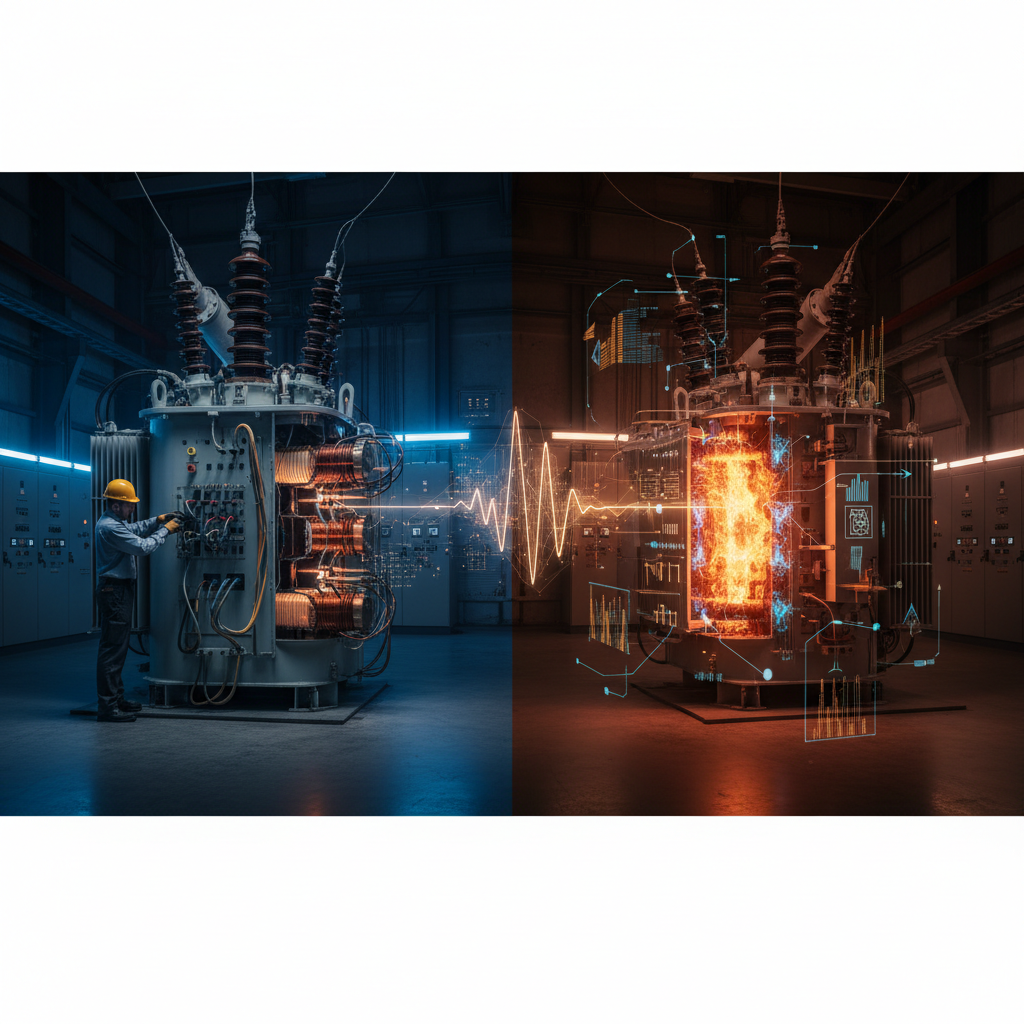
| Feature | Preventive Maintenance | Predictive Maintenance |
|---|---|---|
| Trigger | Time-based, fixed schedule | Condition-based, data-driven |
| Cost Efficiency | Can be inefficient (over-maintenance) | Optimized (maintenance only when needed) |
| Failure Risk | Reduced, but still possible | Significantly reduced |
| Downtime | Scheduled | Minimized, often avoided |
| Examples | Visual inspections, routine cleaning | DGA, IR scans, partial discharge testing |
Integrating Data for Optimal Results
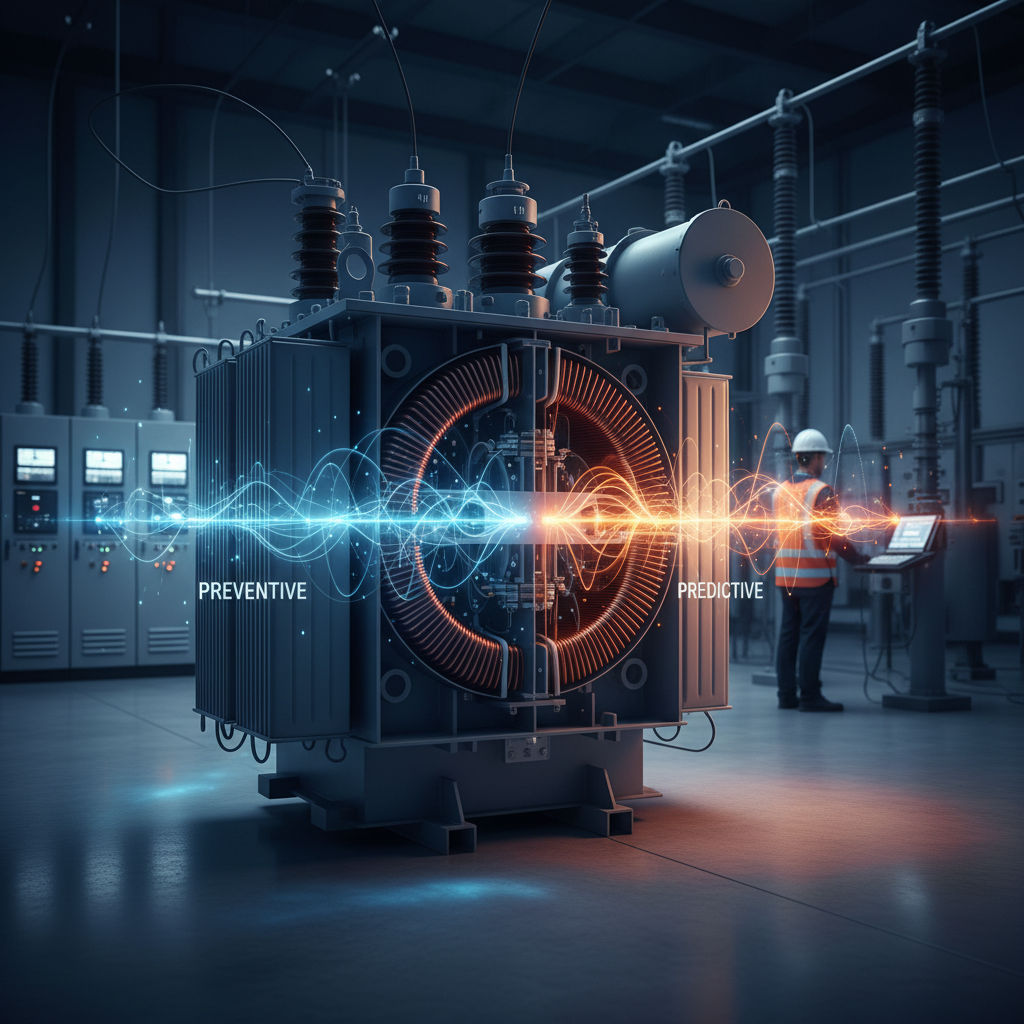
Many facilities recognize the benefits of integrating both preventive and predictive maintenance strategies. Regular visual inspections and cleaning (PM) complement advanced diagnostics (PdM). The data obtained from predictive maintenance activities can inform and optimize preventive schedules, creating a highly efficient and reliable maintenance program. This integrated approach aligns with the principles found in NETA MTS, which encourages a comprehensive and systematic approach to electrical equipment maintenance.
Bottom Line
Effective transformer maintenance is a strategic investment that pays dividends in reliability, safety, and cost savings. While preventive maintenance offers a baseline of care, predictive techniques like DGA, IR thermography, and partial discharge testing provide invaluable insights into the real-time health of your transformers, enabling timely, targeted interventions. Partnering with experienced professionals for these specialized tests ensures compliance with industry standards and maximizes the operational life of your critical assets. AK&J Electric provides comprehensive transformer testing and maintenance services tailored to your facility's needs, helping you move beyond reactive repairs to proactive asset management.