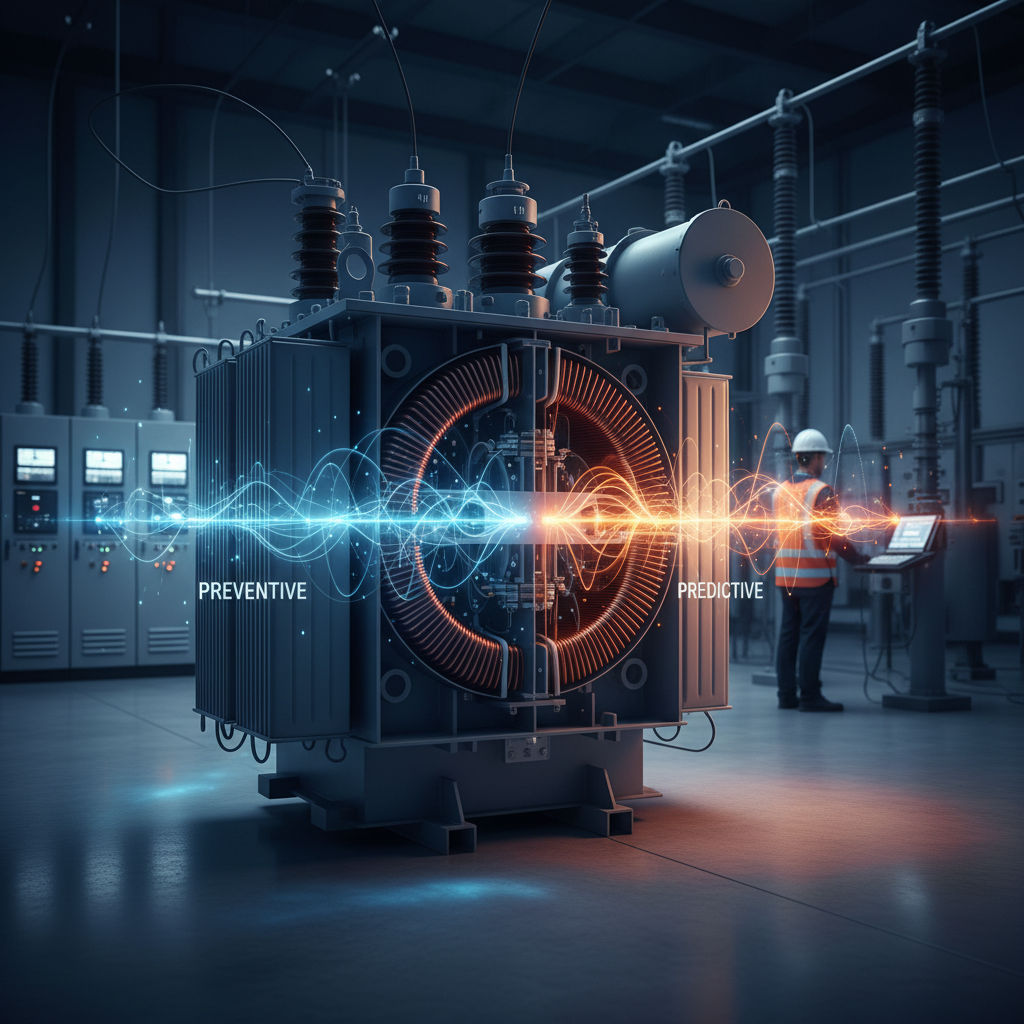
Electrical transformers are the backbone of any facility's power distribution system, quietly stepping voltage up or down to meet operational demands. Their consistent operation is critical, but like any hardworking asset, they require attention to ensure longevity and prevent catastrophic failures. Understanding the nuances between preventive and predictive maintenance can significantly impact your facility's uptime and budget.
Understanding Transformer Maintenance Approaches
Historically, preventive maintenance (PM) has been the cornerstone of asset management. This approach involves scheduled inspections, tests, and repairs aimed at preventing potential issues before they cause equipment failure. While effective, it can sometimes lead to unnecessary maintenance or miss impending failures that occur outside scheduled intervals.
Predictive maintenance (PdM), on the other hand, utilizes advanced monitoring and diagnostic techniques to predict when equipment failure might occur. This data-driven approach allows maintenance to be performed precisely when needed, optimizing resources and minimizing downtime.
Preventive Maintenance for Transformers
Preventive maintenance for transformers often follows a time- or usage-based schedule. Key activities include:
- Visual Inspections: Checking for oil leaks, corrosion, arcing, loose connections, and overall physical condition.
- Cleaning: Removing dust, dirt, and debris from cooling fins, bushings, and insulators to maintain thermal efficiency and prevent flashovers.
- Oil Sampling and Basic Testing: Regular sampling for dielectric strength and acidity to ensure the insulating oil's integrity. This is a foundational step, but more advanced analysis falls under predictive methods.
- Tap Changer Inspection: Ensuring tap changers operate smoothly and contacts are in good condition.
- Tightening Connections: Verifying torque on bolted connections to prevent hot spots and resistance issues.
These scheduled tasks are vital for maintaining basic operational health and often align with recommendations found in standards like NETA MTS (Maintenance Testing Specifications) which outlines periodic electrical testing requirements.
Predictive Maintenance for Transformers
Predictive maintenance goes beyond scheduled checks, employing sophisticated tools to gather real-time or near real-time data on transformer health. This allows for condition-based maintenance, addressing issues before they escalate. Key PdM techniques for transformers include:
Dissolved Gas Analysis (DGA)
Insulating oil in power transformers can degrade due to electrical or thermal stresses, producing various dissolved gases (e.g., hydrogen, methane, ethane, ethylene, acetylene, carbon monoxide, carbon dioxide). DGA involves periodically sampling and analyzing these gases to detect incipient faults such as overheating, arcing, or partial discharge. The types and concentrations of gases can pinpoint the nature and severity of the problem. For example, high acetylene often indicates arcing, while ethylene suggests high-temperature hotspots. DGA is a highly effective predictive tool, offering early warning of developing issues long before they become critical.
Infrared (IR) Thermography Scans
Infrared scanning uses thermal imaging cameras to detect abnormal temperature rises in transformer components, connections, and bushings. Hot spots indicate increased resistance, which can be caused by loose connections, deteriorated contacts, or insulation breakdown. Regular IR scans, often performed annually or bi-annually, can identify these issues non-invasively, allowing for corrective action before a failure occurs. NFPA 70B, "Recommended Practice for Electrical Equipment Maintenance," emphasizes the value of infrared inspections for identifying electrical anomalies.
Partial Discharge (PD) Testing
Partial discharge is a localized dielectric breakdown of a small portion of an electrical insulation system under high voltage stress, which does not completely bridge the electrodes. In transformers, PD can occur in voids within solid insulation, gas bubbles in oil, or surface discharges. If left unchecked, PD will progressively degrade insulation, leading to eventual dielectric breakdown and failure. PD testing detects these small electrical discharges, providing a critical indicator of insulation degradation. Acoustic, electrical, and ultra-high-frequency (UHF) methods are used for PD detection, helping to locate and assess the severity of internal insulation defects.
Comparing PM and PdM: A Quick Overview
| Feature | Preventive Maintenance (PM) | Predictive Maintenance (PdM) |
|---|---|---|
| Schedule | Time- or usage-based | Condition-based, data-driven |
| Goal | Prevent failure, extend life | Predict failure, optimize repair |
| Cost Focus | Fixed, recurring | Variable, targeted |
| Tools | Visual inspection, basic testing | DGA, IR, PD, vibration analysis |
| Efficiency | Good, but can be excessive | High, minimizes unnecessary work |
| Failure Risk | Reduced, but still possible | Significantly reduced |
Integrating Maintenance Strategies
For optimal transformer reliability, a blended approach combining both preventive and predictive maintenance is often the most effective. Regular PM tasks establish a baseline of good operating condition and address common wear-and-tear issues. PdM techniques then provide deeper insights into the transformer's internal health, allowing for precise, condition-based interventions.
For instance, while a visual inspection (PM) might not reveal internal winding degradation, a DGA (PdM) can detect the gases produced by such an issue. Similarly, an IR scan (PdM) can identify a loose connection that a scheduled tightening (PM) might have missed if it developed rapidly between intervals. Together, these strategies provide a comprehensive shield against unexpected transformer failures, ensuring compliance with standards such as the National Electrical Code (NEC 2023) by maintaining equipment in safe operating condition.
Bottom Line
Investing in a robust transformer maintenance program is not merely a cost; it's an investment in operational continuity and safety. By strategically deploying both preventive and predictive maintenance techniques—including critical diagnostics like Dissolved Gas Analysis, Infrared Thermography, and Partial Discharge testing—facility managers and plant engineers can maximize transformer lifespan, minimize unscheduled downtime, and ensure reliable power delivery. AK&J Electric offers comprehensive electrical maintenance and testing services tailored to your facility's unique needs, helping you implement effective strategies for your critical assets.