When an unexpected electrical outage strikes, the immediate aftermath can be chaotic and stressful. Knowing precisely what to do in the first hour can mean the difference between a quickly resolved issue and prolonged downtime, not to mention ensuring the safety of personnel. This guide outlines essential actions to take immediately following an electrical disruption at your facility.
Prioritize Safety: People Before Power
The absolute first priority in any electrical emergency is the safety of all personnel. Electrical hazards are invisible and can be deadly. Do not attempt to investigate or repair equipment unless you are a qualified person with proper PPE and training, as defined by NFPA 70E, Standard for Electrical Safety in the Workplace.
Immediate Safety Protocols:
- Alert and Evacuate: Ensure all non-essential personnel are safely evacuated from affected areas, especially near known electrical equipment or suspected points of failure. Follow your facility's emergency response plan.
- Secure the Area: Barricade or rope off areas with exposed electrical components, damaged equipment, or standing water. Clearly mark these zones with warning signs.
- Account for Personnel: Conduct a rapid headcount to confirm everyone is safe and accounted for.
- Do Not Touch: Instruct everyone to avoid touching electrical panels, machinery, or downed lines. Assume all circuits are energized until proven otherwise by a qualified person.
Initial Assessment and Isolation
Once immediate safety is addressed, the next step involves a careful, systematic assessment and, if possible, isolation of the problem. This should only be performed by qualified personnel using appropriate lockout/tagout (LOTO) procedures.
Steps for Qualified Personnel:
- Identify the Scope: Determine if the outage is localized to a specific area, a single piece of equipment, or facility-wide. Check external indicators like streetlights or neighboring businesses to see if the utility grid is affected.
- Check Local Disconnects: For localized outages, inspect local disconnect switches or circuit breakers for tripped conditions. Do not immediately re-energize without investigating the cause of the trip.
- Initiate Lockout/Tagout (LOTO): For any equipment that needs to be inspected or worked on, apply proper LOTO procedures as mandated by OSHA regulations and detailed in NFPA 70E. This ensures the equipment cannot be inadvertently re-energized.
- Isolate Upstream Power: If the outage is facility-wide or involves critical distribution equipment, safely de-energize main service disconnects or upstream breakers, if accessible and safe to do so. This creates a zero-energy state for further investigation.
Important Note: De-energization and LOTO are complex procedures requiring specific training and adherence to established safety protocols. Rushing or bypassing these steps can lead to severe injury or death.
Gather Information for Rapid Response
While safety and isolation are paramount, simultaneously gathering accurate information is crucial for external support. The more details you can provide, the faster and more effective the emergency response will be.
Key Information to Collect (Without Risking Safety):
- Time of Outage: Exact time the power went out.
- Affected Areas: Precise locations within the facility.
- Observable Events: Any sounds (e.g., loud bangs, hums), smells (e.g., burning), or visual cues (e.g., smoke, sparks, tripped breakers, damaged equipment) observed immediately before or during the outage.
- Last Known Status: What equipment was running? Was any maintenance being performed?
- Recent Changes: Any recent modifications, repairs, or electrical work completed in the facility.
- System Diagrams: Have single-line diagrams, panel schedules, and facility layouts readily available for technicians.
The Role of Qualified Electrical Contractors
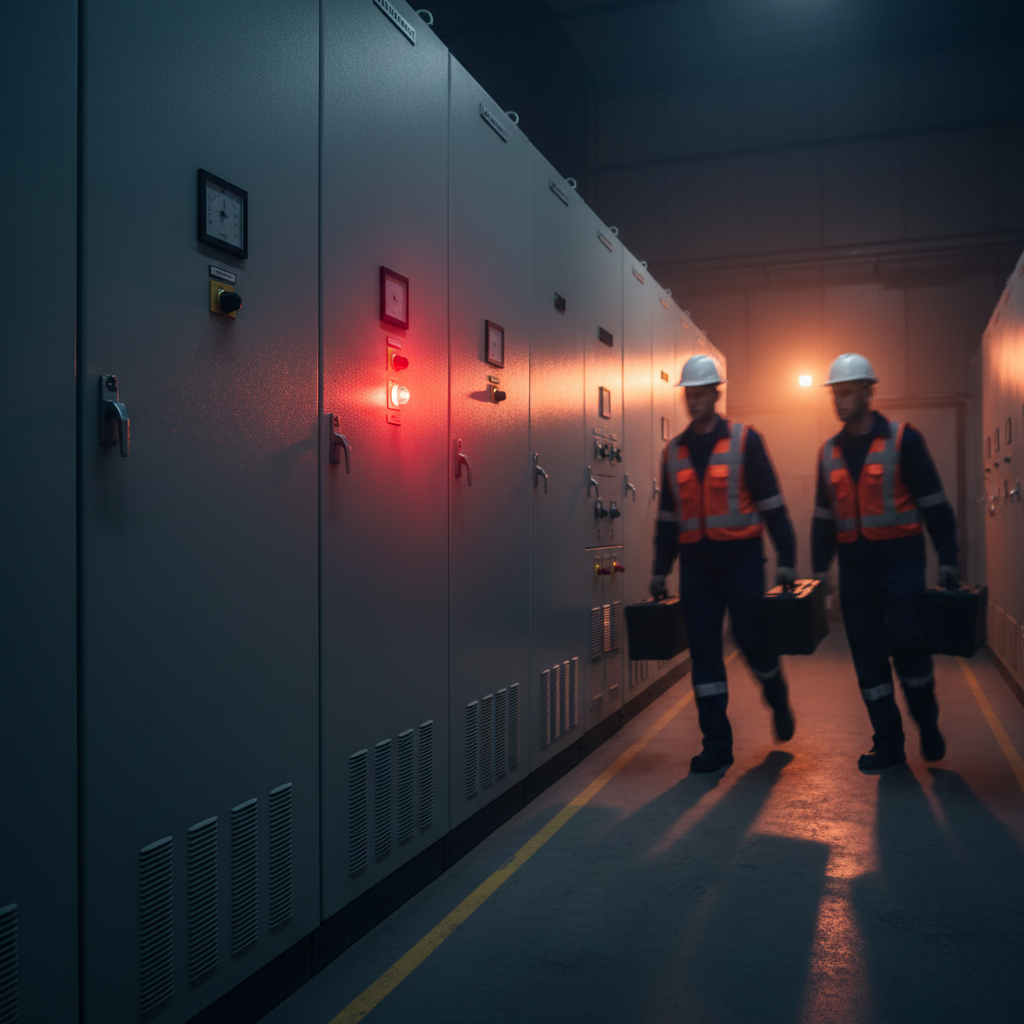
Most significant electrical outages, especially those involving main switchgear, transformers, or complex distribution systems, require the expertise of qualified electrical contractors. Standards like NETA MTS (Maintenance Testing Specifications) emphasize the importance of trained professionals for diagnostics, testing, and repair of electrical power equipment.
Why Call for External Help Immediately?
- Specialized Tools & Expertise: Emergency electrical services bring specialized diagnostic equipment, safety gear, and the deep expertise required to troubleshoot complex electrical faults. They understand the intricacies of various systems, from low-voltage controls to high-voltage switchgear.
- Code Compliance: Qualified technicians ensure that all repairs and restorations comply with current electrical codes, such as the NEC (National Electrical Code) 2023, and safety standards like NFPA 70E.
- Speed & Efficiency: Their experience allows for faster identification of issues and efficient execution of repairs, minimizing costly downtime.
- 24/7 Availability: Reputable emergency service providers operate around the clock, understanding that electrical emergencies don't adhere to business hours.
Emergency Service Checklist
| Action Step | Priority | Performed By | Notes |
|---|---|---|---|
| Ensure Personnel Safety | High | All personnel / Facility Mgr. | Evacuate, secure, account. |
| Identify Scope of Outage | High | Qualified Staff | Local vs. facility-wide. |
| LOTO Procedures | High | Qualified Staff | Apply for any investigated equipment. |
| Gather Incident Info | Medium | Facility Mgr. / Staff | Time, affected areas, observations. |
| Contact Emergency Service | High | Facility Mgr. | Provide all collected information. |
| Prepare for Arrival | Medium | Facility Mgr. / Staff | Clear access, provide diagrams, safety brief. |
Bottom Line
An electrical outage is a serious event that demands a swift, organized, and safety-focused response. The first hour is critical for ensuring personnel safety, performing initial assessments, and initiating proper lockout/tagout procedures. For any significant electrical disruption, engaging a qualified, 24/7 emergency electrical service provider is paramount for safe, efficient, and code-compliant restoration. AK&J Electric provides comprehensive 24/7 emergency electrical service, ready to respond to your facility's critical needs with experienced, safety-focused technicians and state-of-the-art equipment.