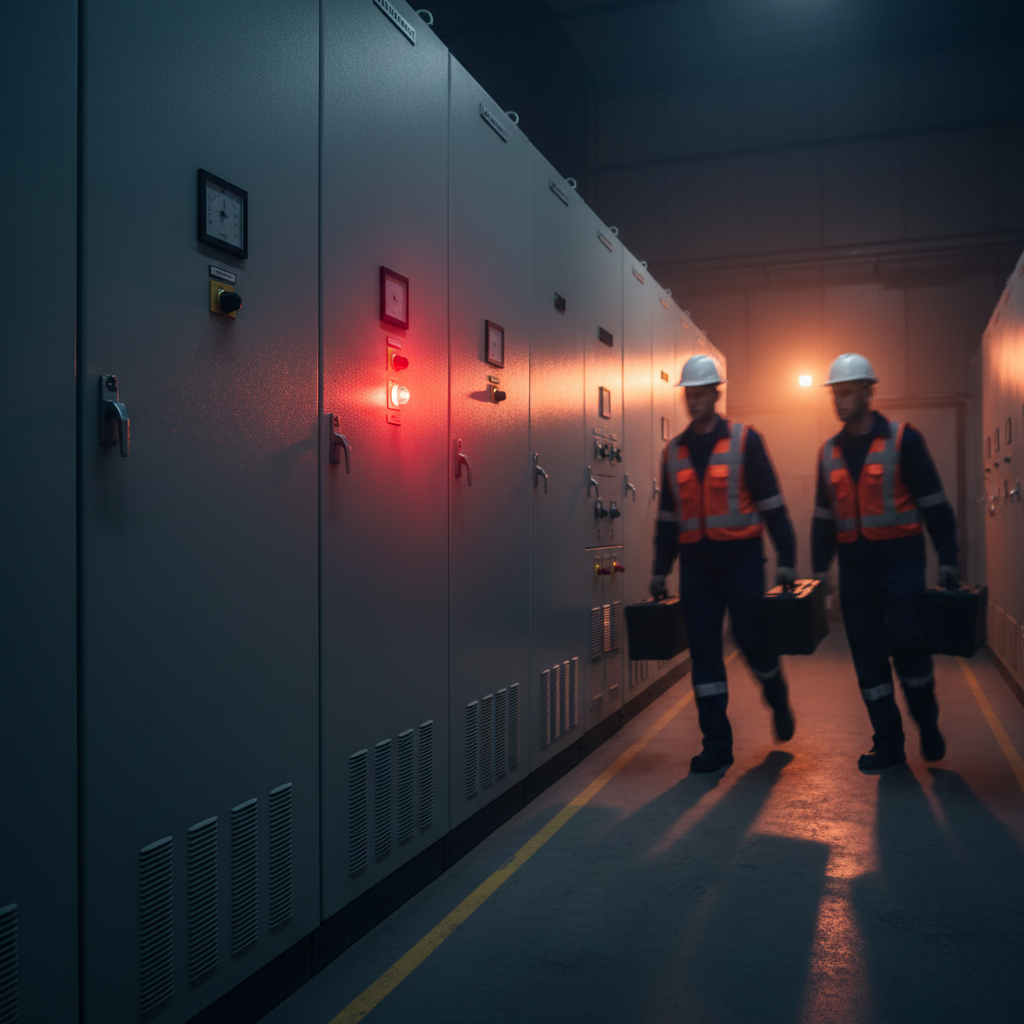
When an unexpected electrical outage halts operations, the initial moments are critical. Swift, informed action can prevent further damage, ensure personnel safety, and set the stage for efficient restoration. This guide provides a practical framework for facility managers, plant engineers, and electrical contractors facing an electrical emergency, focusing on the immediate steps to take within the first hour to manage the crisis effectively and safely.
Prioritize Safety: Your First and Foremost Concern
Before any assessment or troubleshooting begins, personnel safety must be the absolute priority. Electrical emergencies often involve hazards such as exposed energized parts, arc flash, and electrocution risks. Adherence to safety protocols is non-negotiable.
- Secure the Area: Immediately restrict access to the affected areas. Use barricades, caution tape, or personnel to prevent unauthorized entry. Communicate the danger clearly to all personnel on site.
- Account for Personnel: Conduct a rapid headcount to ensure all employees, contractors, and visitors are safe and accounted for. Verify that no one is trapped or injured in the affected zone.
- Assess Immediate Danger: Look for visible signs of electrical fault, such as smoke, fire, arcing, or unusual noises. If these are present, initiate fire safety protocols and evacuate personnel to a designated safe zone immediately.
- Personal Protective Equipment (PPE): If any assessment requires approaching potentially energized equipment, ensure all personnel involved are trained and equipped with the appropriate Arc-Rated (AR) PPE as mandated by NFPA 70E, Standard for Electrical Safety in the Workplace. No entry into arc flash boundaries without proper PPE and lockout/tagout procedures in place.
Isolation and Initial Assessment
Once safety is assured, the next step is to isolate the affected electrical systems and begin a preliminary assessment of the situation.
- Verify Loss of Power: Confirm the extent of the outage. Is it site-wide, a specific building, a single panel, or just a circuit? Check main breakers, utility feeds, and local distribution panels.
- Lockout/Tagout (LOTO): For any equipment that must be manually operated or inspected, always follow established LOTO procedures per NFPA 70E and OSHA regulations. This ensures that electrical sources are de-energized, locked, and tagged to prevent accidental re-energization during work. Never assume a circuit is dead. Use a properly rated and tested voltage detector to verify absence of voltage.
- Gather Information: Collect as much information as possible from personnel who witnessed the event. What happened leading up to the outage? Was there a loud noise, a flash, or a burning smell? Note the exact time of the incident.
- Check Utility Status: If the outage appears to be external or site-wide, contact your utility provider to determine if there's a broader grid issue or an issue with the utility's service drop to your facility.
Communicate and Document
Effective communication and diligent documentation are vital during an emergency.
- Notify Key Stakeholders: Inform facility management, production supervisors, IT personnel, and other relevant departments about the outage status and anticipated impact. Keep them updated regularly.
- Contact Emergency Services (If Needed): If there is fire, significant smoke, or injuries, contact local emergency services (e.g., fire department, paramedics) immediately.
- Contact Your Emergency Electrical Service Provider: Reach out to your pre-qualified electrical service contractor. Provide them with the initial details you've gathered. A reputable contractor, like AK&J Electric, offers 24/7 emergency response and can dispatch technicians promptly.
Example: Initial Steps for a Major Outage
| Timeframe | Action | Responsible Party | Notes |
|---|---|---|---|
| 0-5 minutes | Secure immediate area, account for personnel | Safety/Operations Lead | Prioritize human life and well-being. |
| 5-15 minutes | Assess visible hazards, initiate LOTO if safe | Maintenance/Electrical | Follow NFPA 70E for arc flash safety. |
| 15-30 minutes | Verify outage scope, check utility status | Facility Manager/Engineer | Gather facts, avoid assumptions. |
| 30-60 minutes | Notify stakeholders, contact emergency service | Facility Manager | Communicate clearly, prepare for response. |
Prepare for Troubleshooting and Restoration
While waiting for your emergency service team, certain preparatory steps can expedite their work.
- Provide Facility Diagrams: Have up-to-date single-line diagrams, electrical schematics, and site maps readily available for technicians. This is a key component of effective electrical system management, often required for arc flash studies and compliant with NEC 2023, Article 110.15(A) regarding electrical diagrams.
- Access to Equipment: Clear paths and ensure easy access to electrical rooms, switchgear, transformers, and distribution panels. Remove any obstructions.
- Review Maintenance Records: Provide recent maintenance records, particularly for the affected equipment. This can offer clues regarding potential failure points or recurring issues. Regular maintenance and testing, as outlined by NETA MTS (Standard for Maintenance Testing Specifications for Electrical Power Equipment and Systems), are crucial for preventing such emergencies.
- Identify Critical Loads: Determine which processes or equipment are most critical for business continuity. This information helps prioritize restoration efforts.
Bottom Line
The first hour of an electrical outage is a whirlwind of potential hazards and critical decisions. By prioritizing safety, systematically isolating the issue, communicating effectively, and preparing for professional intervention, facility managers can significantly mitigate risks and accelerate the return to normal operations. Relying on experienced, 24/7 emergency electrical service providers, like AK&J Electric, ensures that expert help is on site quickly to diagnose, repair, and restore power safely and efficiently, minimizing costly downtime for your facility.