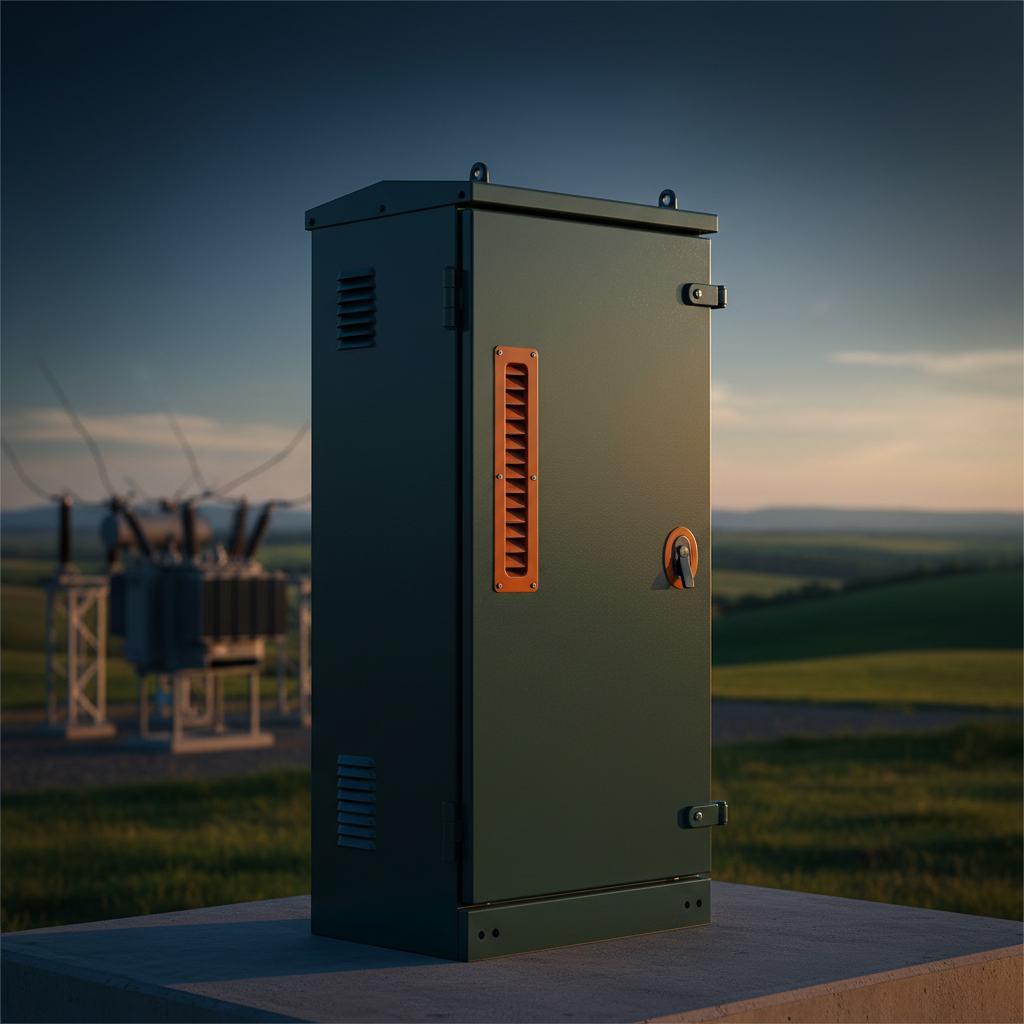
For industrial facilities, reliable and safe electrical distribution is paramount. The choice between low-voltage (LV) and medium-voltage (MV) switchgear is a critical decision that impacts system performance, cost, and safety. This article provides a practical comparison to help you select the appropriate switchgear for your industrial applications.
Understanding Voltage Classifications
According to IEEE Standard C37.20.2, C37.20.3, and C37.20.7, switchgear is broadly categorized by its nominal voltage rating. Low-voltage (LV) switchgear typically operates at voltages up to 1,000 V, encompassing common industrial voltages like 480 V and 600 V. Medium-voltage (MV) switchgear, on the other hand, is designed for systems between 1,000 V and 38 kV, with common industrial applications often falling in the 2.4 kV to 15 kV range. The National Electrical Code (NEC) also defines these classifications in Article 100.
Key Differences: LV vs. MV Switchgear
While both LV and MV switchgear serve to protect and isolate electrical circuits, their design, construction, and application differ significantly.
Construction and Components
- LV Switchgear: Primarily uses air-insulated circuit breakers (e.g., molded case, insulated case, or air power circuit breakers), fuses, and contactors. These components are typically housed within metal-enclosed assemblies. The focus is on protecting equipment from overloads and short circuits within the facility.
- MV Switchgear: Employs more robust insulation methods, such as air, gas (SF6), or vacuum. Components include medium-voltage circuit breakers (vacuum or SF6), load break switches, and protective relays. MV switchgear is designed to handle higher fault currents and provide more sophisticated protection for main feeders and larger transformers.
Protection and Interrupting Capabilities
MV switchgear typically offers higher interrupting ratings and more advanced protective relaying capabilities than LV switchgear. This is essential for dealing with the larger fault currents inherent in medium-voltage systems. Modern protective relays in MV switchgear often incorporate communication capabilities for enhanced system monitoring and control, aligning with NETA ATS and MTS requirements for testing and maintenance.
Cost Considerations
The initial capital expenditure for MV switchgear is generally higher than for LV switchgear due to more complex designs, larger components, and specialized insulation. However, a comprehensive cost analysis must consider the total cost of ownership, which includes installation, maintenance, and potential energy losses. In large industrial facilities, utilizing MV distribution can lead to smaller conductor sizes, reduced voltage drop, and lower I²R losses over long distances, potentially offsetting the higher initial investment. The choice can also impact the overall footprint of electrical rooms.
Applications in Industrial Settings
When to Choose LV Switchgear
LV switchgear is the workhorse for most internal facility distribution. It is ideal for:
- Distribution to individual motors, lighting panels, and HVAC systems.
- Feeder circuits to smaller distribution panels.
- Applications where the main utility supply is less than 1,000 V.
- Compliance with NFPA 70 (NEC) for circuits under 1,000 V.
When to Choose MV Switchgear
MV switchgear is typically employed for larger power distribution and critical loads. It is the preferred choice for:
- Main utility service entrances where the supply voltage is medium voltage.
- Primary distribution to large transformers that step down to utilization voltages.
- Feeding large motors (e.g., >1,000 HP) directly.
- Facilities with extensive electrical loads spread over a large area, benefiting from reduced distribution losses.
- Compliance with IEEE C37 series standards for switchgear above 1,000 V.
Code and Standard References
Adherence to relevant codes and standards is non-negotiable for both LV and MV switchgear installations. Key standards include:
- NFPA 70 (National Electrical Code - NEC 2023): Provides requirements for electrical installations, including overcurrent protection, grounding, and wiring methods for both LV and MV systems. Article 490 specifically addresses equipment operating at over 1,000 V.
- NFPA 70E (Standard for Electrical Safety in the Workplace): Mandates safe work practices and hazard analysis (e.g., arc-flash and shock hazard analysis) for personnel working on or near energized LV and MV electrical equipment.
- NETA MTS (Maintenance Testing Specifications for Electrical Power Equipment and Systems): Outlines recommended practices for acceptance and maintenance testing of various electrical equipment, including switchgear, to ensure reliability and safety.
- IEEE C37 Series Standards: A comprehensive set of standards specifically for MV switchgear, circuit breakers, and protective relaying, covering design, testing, and application.
Comparison Table
| Feature | Low-Voltage (LV) Switchgear | Medium-Voltage (MV) Switchgear |
|---|---|---|
| Voltage Range | Up to 1,000 V | 1,000 V to 38 kV |
| Primary Use | Internal facility distribution | Main power distribution, large loads |
| Components | Air breakers, fuses, contactors | Vacuum/SF6 breakers, load break switches |
| Protection | Overload, short circuit | Advanced relaying, high fault current |
| Cost (Initial) | Lower | Higher |
| Footprint | Generally smaller | Generally larger |
The Bottom Line
The decision between LV and MV switchgear for an industrial site is a strategic one, balancing immediate project costs with long-term operational efficiency, safety, and scalability. A thorough understanding of your facility