Control panels are the nerve center of industrial and commercial operations, housing the vital components that govern machinery, processes, and safety systems. When designing or upgrading these essential systems, a fundamental decision arises: whether to implement a Programmable Logic Controller (PLC) based system or a traditional hardwired approach. Each method offers distinct advantages and considerations that directly impact a facility's efficiency, flexibility, and long-term cost of ownership.
Understanding Hardwired Control Panels
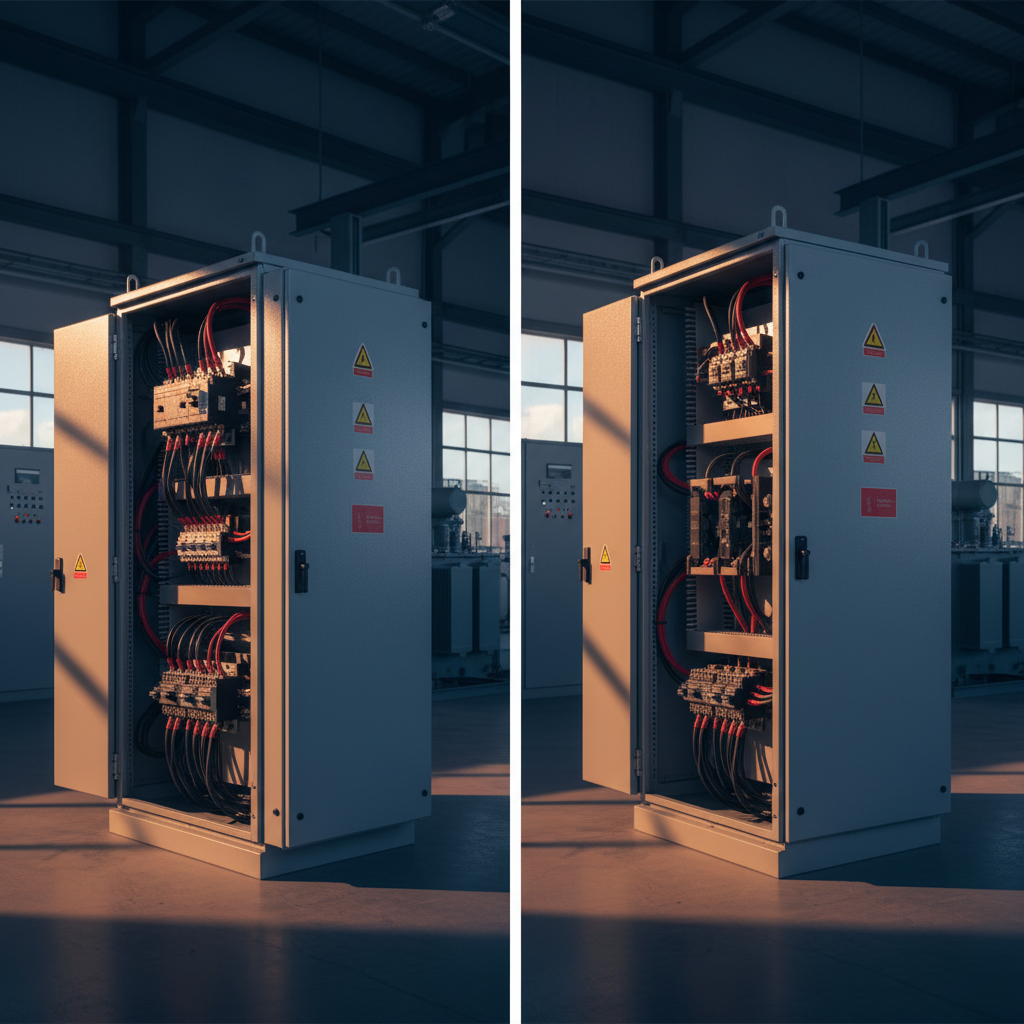
Hardwired control panels rely on physical relays, timers, and switches, with discrete wiring connecting each component to execute specific logic functions. This traditional approach means that every function, interlock, and sequence is determined by the physical wiring paths. Changes to the control logic require physical modifications to the wiring, often involving rewiring, adding components, or removing existing ones.
Key Characteristics:
- Fixed Logic: The control logic is directly tied to the physical wiring.
- Discrete Components: Utilizes relays, contactors, pushbuttons, indicator lights, and terminal blocks.
- Troubleshooting: Often involves tracing circuits with a multimeter and referring to detailed schematics.
- Scalability: Limited by physical space and the complexity of wiring; scaling up can be labor-intensive and costly.
When Hardwired Panels Win:
Hardwired panels are typically best suited for simpler, standalone applications where the control logic is well-defined, unlikely to change, and involves a limited number of inputs and outputs. Examples include basic motor starters, pump controls, or small HVAC systems with fixed sequences. Their reliability in harsh environments, immunity to software glitches, and straightforward troubleshooting (for experienced technicians) can be advantageous in these specific scenarios.
Understanding PLC-Based Control Panels
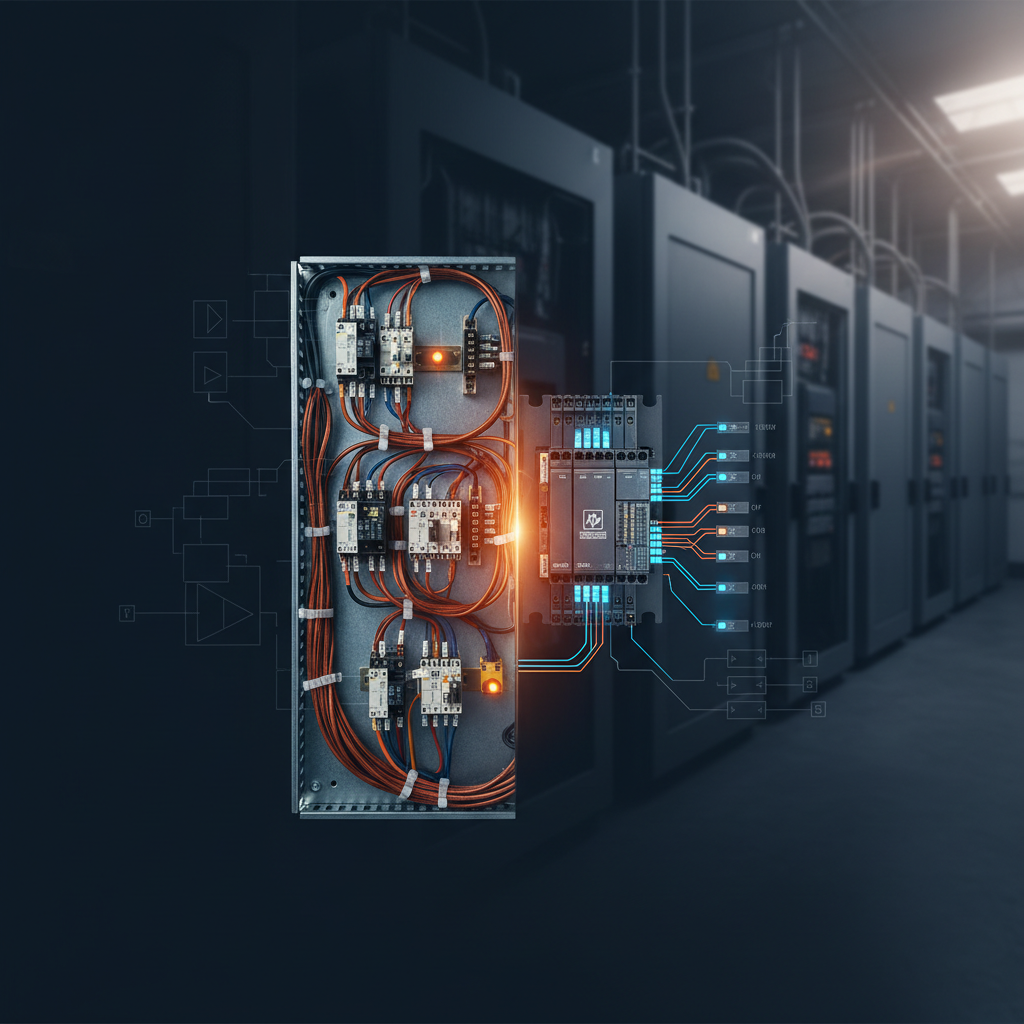
PLC-based control panels utilize a programmable microprocessor to execute control logic. Instead of physical wiring dictating logic, the PLC's CPU runs a software program (ladder logic, function block diagram, structured text, etc.) that defines the operation of connected devices. Inputs from sensors and switches are read by the PLC, the program is executed, and outputs to actuators, motors, and other devices are then activated accordingly.
Key Characteristics:
- Flexible Logic: Control logic is defined by software, allowing for easy modifications and updates without rewiring.
- Centralized Processing: A single PLC can manage complex operations across numerous inputs and outputs.
- Advanced Capabilities: Supports complex algorithms, data logging, communication with other systems (e.g., SCADA, HMIs), and remote access.
- Troubleshooting: Often involves software diagnostics, status indicators on the PLC modules, and sometimes remote monitoring.
- Scalability: Highly scalable by adding I/O modules, network devices, and expanding the software program.
When PLC Panels Win:
PLC-based systems excel in applications requiring complex control, flexibility, data acquisition, and integration with other systems. They are ideal for manufacturing lines, process control, building automation, and any application where future modifications or expansion are anticipated. The ability to quickly modify logic, integrate with Human-Machine Interfaces (HMIs), and connect to enterprise systems offers significant long-term operational advantages.
Decision Matrix: Hardwired vs. PLC
The choice between hardwired and PLC control systems hinges on several critical factors. Consider the following when evaluating your options:
| Feature | Hardwired Control Panel | PLC-Based Control Panel |
|---|---|---|
| Application | Simple, fixed logic, few I/O | Complex, flexible, many I/O, data needs |
| Cost (Initial) | Lower for very simple systems | Higher due to hardware & programming |
| Cost (Long-Term) | Higher for modifications/expansion | Lower for modifications/expansion |
| Flexibility | Low (physical rewiring needed) | High (software modifications) |
| Scalability | Limited, complex to expand | High, modular expansion |
| Diagnostics | Physical troubleshooting, schematics | Software diagnostics, HMI, remote |
| Integration | Minimal | High (SCADA, MES, IIoT) |
| Space | Can be larger for complex logic | Often more compact for complex logic |
| Maintenance | Component replacement | Software updates, module replacement |
Integration Costs and Scaling Considerations
Integration Cost: For hardwired systems, integration costs primarily involve the labor for physical wiring and component installation. For PLC systems, initial integration costs include the PLC hardware, software licenses, and the engineering time required for programming and system commissioning. While the upfront investment for a PLC system can be higher, particularly for smaller applications, this is often offset by reduced costs in the long run due to easier modifications and enhanced diagnostics.
Scaling: This is where PLCs dramatically outperform hardwired systems. Adding new functions or expanding I/O on a hardwired panel often means significant downtime, extensive rewiring, and potential redesign of the panel layout. For PLC systems, scaling typically involves adding I/O modules (often hot-swappable), updating the PLC program, and potentially adding new HMI screens. This modularity and software-driven flexibility significantly reduce the time, labor, and cost associated with expanding capabilities.
Standards and Safety
Regardless of the control method, all control panels must adhere to stringent electrical and safety standards. The National Electrical Code (NEC, NFPA 70) provides foundational requirements for electrical installations, including wiring methods, overcurrent protection, and equipment grounding. For safety in the workplace, particularly concerning electrical hazards, NFPA 70E outlines standard practices for electrical safety in the workplace, emphasizing lockout/tagout procedures and arc-flash hazard analysis. For system testing and maintenance, NETA (International Electrical Testing Association) standards, such as NETA MTS (Maintenance Testing Specifications), provide detailed procedures for verifying the operational integrity of electrical equipment. IEEE standards also frequently apply to specific components or system designs.
AK&J Electric strictly adheres to these and other relevant industry standards in the design, fabrication, and field-service of all control panels, ensuring not only operational efficiency but also the highest levels of safety and compliance.
Bottom Line
The decision between a PLC-based and a hardwired control panel is a strategic one, balancing initial costs against long-term flexibility, scalability, and operational complexity. While hardwired systems remain viable for very simple, static applications, PLC systems offer unparalleled advantages for modern industrial environments demanding adaptability, advanced diagnostics, and seamless integration. Partnering with experienced professionals who understand both approaches, and can assess your specific operational needs and future growth plans, is key to selecting the optimal control solution for your facility. AK&J Electric provides comprehensive control panel design, fabrication, and field-service expertise to help you navigate these critical choices and implement reliable, code-compliant systems.