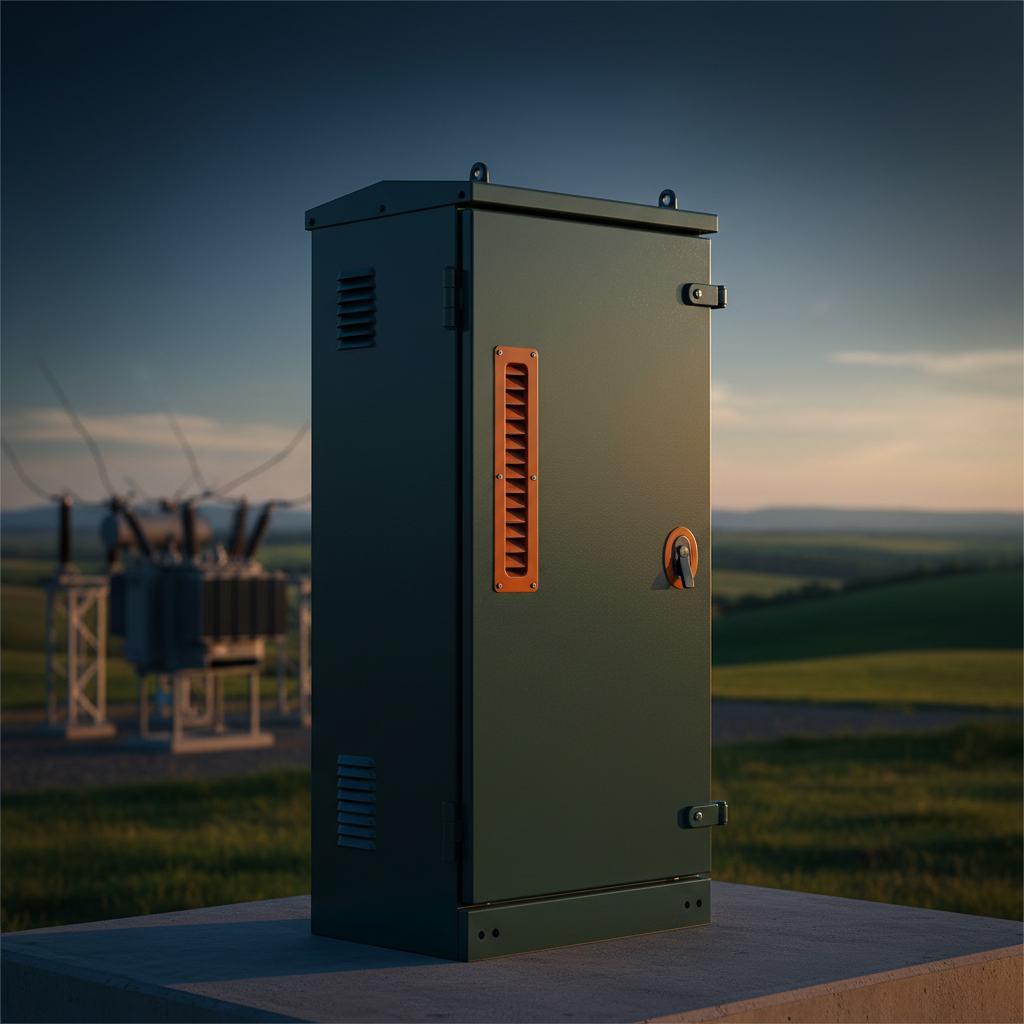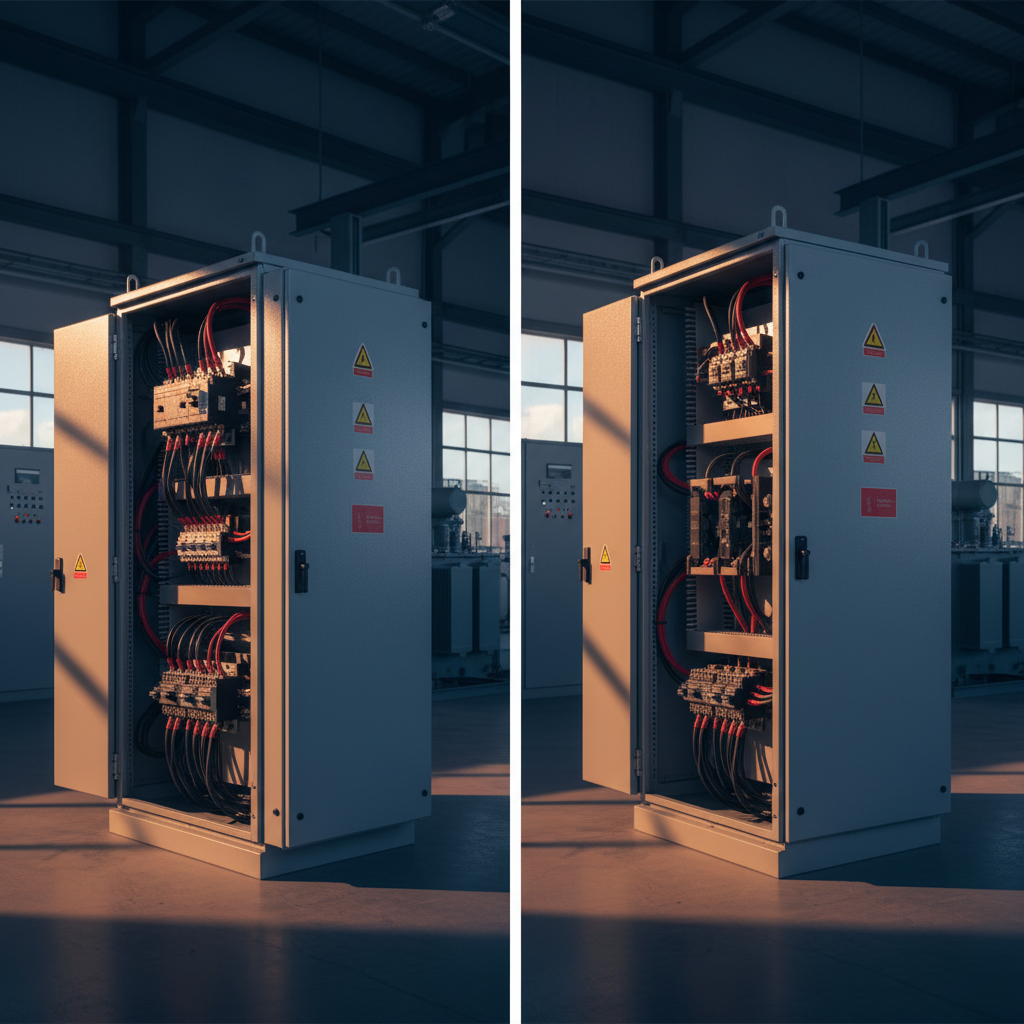
Navigating the complexities of electrical distribution in industrial facilities requires careful consideration of every component, especially switchgear. The choice between low voltage (LV) and medium voltage (MV) switchgear profoundly impacts safety, operational efficiency, and long-term costs. This article explores the key differentiators, applications, and regulatory considerations for each to guide informed decision-making for facility managers, plant engineers, and electrical contractors.
Understanding Voltage Classifications
Before delving into switchgear types, it's essential to define voltage classifications as they pertain to electrical standards in the United States. While precise definitions can vary slightly, common industry practice and standards like the National Electrical Code (NEC) provide clear delineations:
- Low Voltage (LV): Generally refers to systems operating at 1,000 volts (V) or less. Common LV systems in industrial settings include 480V, 208/120V, and 600V. LV switchgear is designed to operate and protect these circuits.
- Medium Voltage (MV): Typically encompasses systems operating above 1,000V up to 38 kV. Industrial applications commonly see MV systems at 2.4 kV, 4.16 kV, 13.8 kV, and 34.5 kV. MV switchgear is engineered for these higher voltage levels.
Key Differences: Ratings, Construction, and Application
The fundamental difference in voltage levels dictates significant variations in design, construction, and appropriate use cases for LV and MV switchgear.
Voltage and Current Ratings
LV switchgear is designed for lower operating voltages and generally higher continuous currents within its range. For instance, a 480V LV switchgear assembly might handle thousands of amperes. MV switchgear, conversely, handles much higher voltages but typically lower continuous currents for a given power capacity, due to the inverse relationship between voltage and current for equivalent power.
Interrupting Ratings
Interrupting ratings, or short-circuit breaking capacity, are crucial for safety. Both LV and MV switchgear are rigorously tested to interrupt fault currents safely. However, the mechanisms and design for arc quenching differ significantly due to the vastly different energy levels involved at higher voltages.
Construction and Insulation
- LV Switchgear: Often features air-insulated circuit breakers (e.g., molded case, insulated case, or air power circuit breakers). Compartments are typically air-filled, and insulation relies on air gaps and solid dielectric materials suitable for lower voltages.
- MV Switchgear: Requires more robust insulation to prevent arcing at higher voltages. Common types include air-insulated, vacuum-insulated, gas-insulated (SF6), or solid dielectric designs. Vacuum interrupters are prevalent in MV circuit breakers due to their superior arc-quenching capabilities.
Applications
LV Switchgear Applications:
- Distribution within buildings and production areas.
- Motor control centers (MCCs).
- Feeder circuits to individual loads (motors, lighting, HVAC, process equipment).
- Generator paralleling and utility tie-ins at the facility's service entrance (if utility voltage is LV).
MV Switchgear Applications:
- Primary power distribution from utility service entrance to major substations within a large industrial complex.
- Distribution to large motors (e.g., 500 HP and above) or high-power transformers.
- Loop feed systems for enhanced reliability in extensive facilities.
- Grid interconnections for on-site generation or utility interaction.
Cost Considerations
Comparing the cost of LV and MV switchgear involves more than just the purchase price; it includes installation, maintenance, and operational expenses.
- Initial Capital Cost: MV switchgear typically has a higher initial per-unit cost than LV switchgear due to its complex insulation, larger footprint, and specialized components. However, for large industrial facilities requiring significant power, MV distribution can be more cost-effective overall by reducing current, conductor sizes, and associated losses.
- Installation Costs: MV installations often require specialized rigging, more robust cable trays, and highly skilled labor, leading to higher installation expenses.
- Maintenance: Both types require regular maintenance, adhering to standards like NETA MTS. MV switchgear maintenance often involves more specialized testing (e.g., insulation resistance, partial discharge) and requires certified MV technicians, which can translate to higher ongoing costs.
Regulatory Compliance and Safety
Adherence to electrical safety standards is paramount for both LV and MV switchgear installations and operations. Key standards include:
-
NFPA 70, National Electrical Code (NEC): The NEC provides the foundational rules for safe electrical installations, covering wiring methods, overcurrent protection, grounding, and equipment requirements for both LV and MV systems. For example, NEC Article 230 addresses services, including MV services over 1000V, and Article 490 specifically covers equipment operating at over 1000V. Compliance ensures the basic safety of the electrical infrastructure.
-
NFPA 70E, Standard for Electrical Safety in the Workplace: This critical standard focuses on electrical safety programs and practices to protect personnel from electrical hazards like arc flash and shock. NFPA 70E applies universally to electrical systems, regardless of voltage. Requirements for arc flash risk assessment, lockout/tagout, energized electrical work permits, and appropriate personal protective equipment (PPE) are equally important for both LV and MV switchgear maintenance and operation. The incident energy associated with MV faults can be significantly higher, often requiring higher levels of PPE and more stringent safety protocols.
-
NETA ATS/MTS (Acceptance/Maintenance Testing Specifications): The International Electrical Testing Association (NETA) provides comprehensive testing specifications for electrical power equipment. NETA Acceptance Testing Specifications (ATS) are for new equipment, and Maintenance Testing Specifications (MTS) are for in-service equipment. These standards outline rigorous testing procedures for both LV and MV switchgear, ensuring their reliable and safe operation throughout their lifespan. Regular testing, as recommended by NETA, is crucial for identifying potential failures before they lead to costly outages or hazardous conditions.
Table: LV vs. MV Switchgear at a Glance
| Feature | Low Voltage Switchgear (≤ 1000V) | Medium Voltage Switchgear (> 1000V to 38kV) |
|---|---|---|
| Typical Voltages | 208/120V, 480/277V, 600V | 2.4kV, 4.16kV, 13.8kV, 34.5kV |
| Primary Use | Final power distribution, motor control, localized loads | Main power distribution, large motors, utility interface |
| Insulation | Air, solid dielectric | Air, vacuum, SF6 gas, solid dielectric |
| Footprint | Smaller for equivalent power at lower current values | Larger for equivalent power at higher voltage values |
| Cost | Lower initial unit cost; higher conductor cost for long runs | Higher initial unit cost; lower conductor cost for long runs |
| Maintenance | Standard electrical testing; less specialized | Specialized MV testing (e.g., partial discharge); highly skilled techs |
| Safety Focus | NFPA 70E arc flash/shock protection for personnel; NEC compliance | Enhanced NFPA 70E protocols due to higher energy; NEC compliance |
Making the Right Choice
The decision between LV and MV switchgear hinges on several factors specific to your industrial facility:
- Facility Size and Power Demand: Larger facilities with high power demands and extensive distribution distances often benefit from MV distribution due to reduced line losses and smaller conductor sizes.
- Existing Infrastructure: Compatibility with existing systems and future expansion plans should be considered.
- Load Characteristics: The voltage requirements of major equipment (e.g., large motors, furnaces) will heavily influence the choice.
- Reliability and Redundancy: MV switchgear often plays a critical role in loop feed or redundant distribution schemes for facilities requiring maximum uptime.
- Budget: While initial costs are a factor, total lifecycle costs, including energy efficiency and maintenance, provide a more accurate picture.
Bottom Line
Selecting the appropriate switchgear — low voltage or medium voltage — is a foundational decision that impacts the safety, efficiency, and longevity of an industrial electrical system. Each option has distinct advantages and applications, with choices driven by facility scale, power requirements, and regulatory compliance. Understanding the nuanced differences in ratings, costs, applications, and adherence to standards such as NFPA 70, NFPA 70E, and NETA MTS is essential for optimizing your facility's electrical infrastructure. AK&J Electric provides comprehensive services, including arc-flash studies, testing, and commissioning, to ensure your switchgear selection and implementation meet the highest standards of safety and performance.