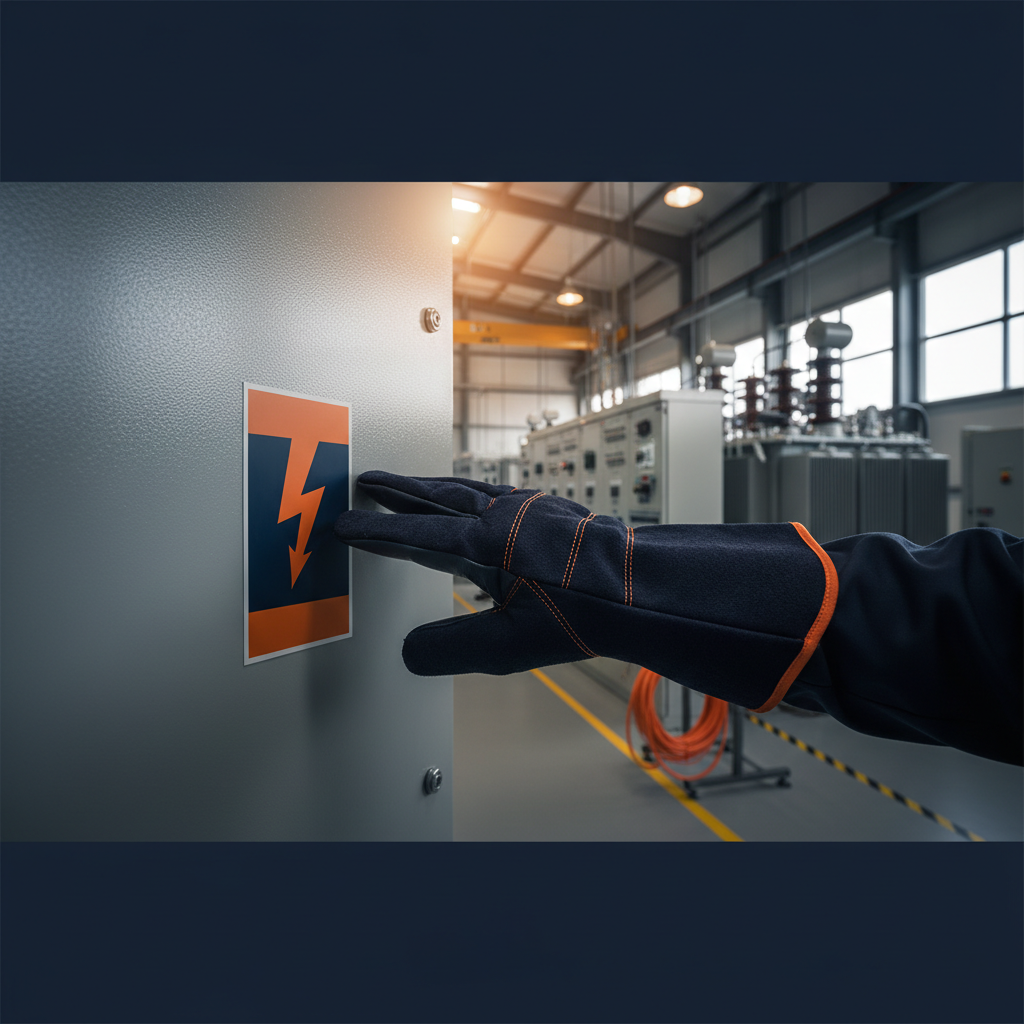
An arc flash study report is a critical document for electrical safety, yet its technical data can seem overwhelming. For facility managers, plant engineers, and electrical contractors, deciphering this report is essential for maintaining a safe working environment and ensuring compliance with standards like NFPA 70E. This guide breaks down the core components of an arc flash study report, offering a practical approach to understanding its implications.
The Purpose of an Arc Flash Study
An arc flash study, as mandated by standards such as NFPA 70E, "Standard for Electrical Safety in the Workplace," is an engineering analysis that calculates the incident energy and arc flash boundaries for electrical equipment. The primary goal is to protect personnel from the severe burns and other hazards associated with an arc flash event. The study identifies the risks, determines appropriate personal protective equipment (PPE), and establishes safe working distances. The National Electrical Code (NEC) also plays a role, particularly in Article 110.16, which requires equipment to be field marked with arc-flash warning labels.
Key Sections of an Arc Flash Study Report
While report formats can vary, certain sections are universal and crucial for operational safety:
Executive Summary
This section provides a high-level overview of the study's findings, key recommendations, and any identified critical issues. It's a good starting point for understanding the overall risk profile of the facility.
Methodology and Assumptions
Understanding the methodology helps to contextualize the results. This section details the software used, data collection methods, system modeling assumptions, and any relevant exclusions. It often references IEEE 1584, "Guide for Performing Arc-Flash Hazard Calculations," which provides calculation methods for incident energy.
System Data and One-Line Diagrams
Accurate system data, including equipment ratings, cable sizes, and protective device settings, forms the basis of the study. Updated one-line diagrams are a vital deliverable, offering a visual representation of the electrical distribution system, including protective device locations and settings. NETA MTS, "Standard for Maintenance Testing Specifications for Electrical Power Distribution Equipment and Systems," emphasizes the importance of accurate documentation.
Deciphering Arc Flash Labels
Perhaps the most important practical output of an arc flash study is the equipment label. These labels, required by NFPA 70E and NEC 110.16, provide immediate, actionable safety information for qualified personnel.
Typical information found on an arc flash label includes:
- System Voltage: The nominal voltage of the equipment.
- Arc Flash Boundary (AFB): The distance from a prospective arc source within which a person could receive a second-degree burn if exposed to an arc flash. This is often expressed in feet or inches.
- Limited Approach Boundary (LAB): The closest distance an unqualified person may approach energized electrical equipment.
- Restricted Approach Boundary (RAB): The closest distance a qualified person may approach energized electrical equipment. Entering this boundary requires specific training, PPE, and a documented energized electrical work permit (if applicable).
- Incident Energy: The amount of thermal energy impressed on a surface, a certain distance from the arc source, usually 1.2 calories/cm² (cal/cm²) at the working distance. This value directly correlates with the severity of a potential burn.
- Working Distance: The assumed distance between the likely arc source and the worker's face/chest, used for incident energy calculations.
- Required PPE Category or Description: This specifies the arc-rated clothing and other protective equipment (e.g., arc-rated face shield, gloves) necessary to work safely within the arc flash boundary. NFPA 70E outlines PPE categories (CAT 1, 2, 3, 4) based on incident energy levels, or it may list specific PPE requirements by energy value.
Example Arc Flash Label Information
| Data Point | Description |
|---|---|
| Nominal Voltage | 480V |
| Arc Flash Boundary | 50 inches |
| Incident Energy | 3.5 cal/cm² at 18 inches |
| PPE Category | CAT 2 |
| Shock Hazard | 480V, Limited Approach: 42 in, Restricted Approach: 12 in |
Understanding Boundary Distances
Boundary distances are critical for establishing safe work practices. Ignoring these boundaries can lead to severe injury or fatality.
- Arc Flash Boundary (AFB): If an arc flash occurs, a person outside this boundary is theoretically safe from a second-degree burn. Anyone inside must wear appropriate arc-rated PPE.
- Limited Approach Boundary (LAB): This boundary is primarily for unqualified persons. Only qualified persons with appropriate training and PPE (if applicable) are permitted to cross it.
- Restricted Approach Boundary (RAB): This boundary marks a greater risk of electrical shock. Entering it requires an energized electrical work permit unless the work is exempt (e.g., voltage testing). Only qualified persons with specific training and shock protection PPE (e.g., insulated tools, gloves) are allowed within.
NFPA 70E provides detailed tables and guidelines for these boundaries, which are derived from system voltage and potential fault conditions.
Recommendations and Mitigation Strategies
Beyond direct safety data, the report will often include recommendations for improving electrical safety. These might include:
- Protective Device Coordination Adjustments: Recommending changes to overcurrent protective device settings to reduce clearing times and thereby lower incident energy.
- Arc Flash Mitigation Technologies: Suggesting the implementation of technologies like arc-resistant switchgear, zone-selective interlocking, differential relaying, or energy-reducing maintenance switches, as discussed in NEC 240.87.
- Training Requirements: Reinforcing the need for ongoing electrical safety training for qualified personnel.
- Maintenance Schedules: Highlighting the importance of regular electrical equipment maintenance, as outlined in NETA MTS, to ensure protective devices operate as designed.
The Bottom Line
Understanding your facility's arc flash study report is not just a regulatory obligation; it's a foundational element of a robust electrical safety program. By focusing on the executive summary, arc flash labels, and boundary distances, facility managers and engineers can effectively contribute to a safer workplace. AK&J Electric provides comprehensive arc flash study services, helping facilities of all sizes navigate these complexities and ensure the safety of their personnel and equipment.